





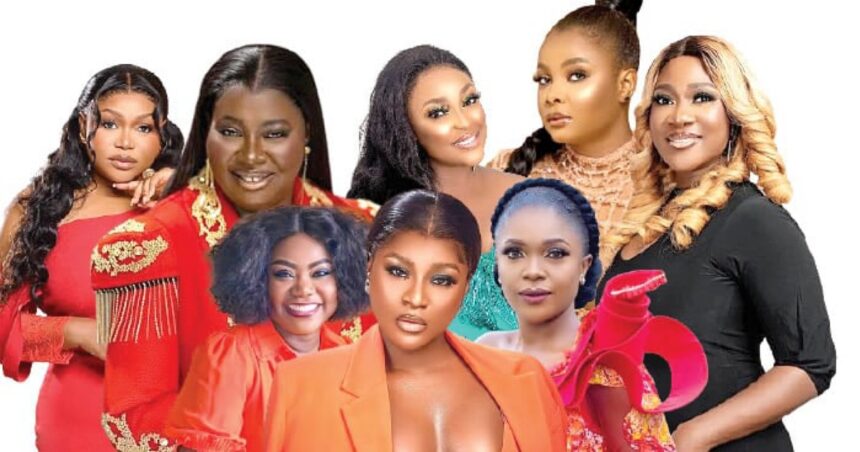
Picture this. It’s December 2025, and the Nigerian film scene buzzes with holiday energy. Crowds pack cinemas across Lagos, Abuja, and beyond, chasing that perfect mix of laughter, drama, and escape. But glance at the box office charts, and a pattern jumps out. Funke Akindele’s Behind the Scenes dominates, pulling in over ₦512 million in just 12 days. Toyin Abraham’s Oversabi Aunty follows close behind, drawing fans with its sharp comedy after a splashy premiere on December 14. And then there’s Ini Edo’s A Very Dirty Christmas, stirring up controversy but still filling seats nationwide. These women aren’t just starring in their films; they produced them too. They call the shots from script to screen. Impressive, right? Yet it raises a nagging question. In today’s Nollywood, does success demand a famous face leading the charge? Or can an independent director, someone without millions of social media followers or a string of blockbusters, still break through?
I remember chatting with a budding filmmaker at a Lagos workshop last year. He had this gritty script about rural life, full of raw emotion and untapped talent. But when he pitched it to distributors, the response was blunt; where’s your star? No big name, no cinema slot, especially not in December, Nollywood’s prime season for hits. That story sticks with me because it highlights a shift. The industry, once a playground for scrappy independents churning out videos on shoestring budgets, now seems locked behind gates guarded by celebrity producers. This piece digs into that; the rise of the star-producer, the gatekeeping choking new voices, and whether all this star power boosts or buries the diversity of stories we see on screen.
Let’s start with the news that’s got everyone talking. December 2025’s box office tells a tale of dominance. Behind the Scenes, directed and produced by Akindele herself, shattered records as the first Nollywood film to open with ₦200 million in its debut weekend. It’s a comedy thriller peeking into the chaotic world of film production, with Akindele playing a lead role that mirrors her own hustle. Critics rave about its meta humor, but the real win is the numbers; by midmonth, it crossed ₦500 million, outpacing everything else. Toyin Abraham, no stranger to this game, dropped Oversabi Aunty on December 18, a film she both stars in and produced. It’s about meddlesome family dynamics, pulling from her knack for relatable chaos. Early reports show strong attendance, building on her past successes like Malaika. Ini Edo rounds out the trio with A Very Dirty Christmas, a festive romp that’s sparked backlash from groups like the Christian Association of Nigeria over its title. Edo, who produced and stars, had to plead with regulators not to yank it from theaters. Despite the noise, it’s holding its own, proving controversy can fuel ticket sales.
These aren’t isolated wins. Nollywood’s top grossers in 2025 lean heavily on actor-producers. Look at the yearend lists; Gingerrr leads with ₦428 million, but Akindele’s film surges ahead. Everybody Loves Jenifa, her 2024 carryover, still echoes with ₦1.88 billion, the all-time high. This trend traces back. Akindele’s A Tribe Called Judah in 2023 raked in ₦1.40 billion, blending her star appeal with production smarts. Abraham’s track record includes films like Ijakumo, where she wore both hats. Edo’s Shanty Town on Netflix showed her producer chops earlier. What ties them? Massive followings; Akindele boasts over 15 million on Instagram, Abraham around 10 million, Edo close to that. Their posts turn into marketing gold, rallying fans to cinemas.
But here’s where it gets tricky. This star-producer model didn’t sprout overnight. Nollywood began in the 90s as a democratized space. Anyone with a camera and a dream could make a film, sell VHS tapes, and build an audience. Directors like Tunde Kelani or Kunle Afolayan rose without needing to act. Diversity thrived; stories spanned Yoruba epics, Igbo dramas, Hausa tales from Kanny-wood. Fast forward to 2025, and the landscape has shifted. Streaming giants like Netflix entered, raising production values but also expectations. Cinemas, now the gold standard for revenue, prioritize sure bets. A report from earlier this year notes how gatekeeping stalls growth; established names hoard opportunities, leaving independents out.
Gatekeeping; it’s the elephant in the room. In Nollywood, distribution is king. Cinemas like Filmhouse or Genesis decide what screens. They favor films with built-in audiences, meaning stars who can guarantee opening weekend crowds. If you’re an independent director, say a fresh graduate from the Nigerian Film Institute with a script about climate change in the Niger Delta, good luck. Without a celebrity attached, your film might languish on YouTube or get buried in festivals. One insider, in a LinkedIn post, called it “playing god over fresh voices.” Jade Osiberu, a director herself, urged the industry to focus on strategy over speeches, hinting at the need for more inclusive paths.
I think about my own brushes with this. Years ago, I shadowed a shoot in Enugu. The director, an unknown, begged actors to join for exposure. Today, that same hustle feels impossible. Cinemas demand marketing budgets, trailers that pop, and yes, famous faces. December amplifies it; it’s blockbuster season, with holidays driving family outings. Slots are scarce, and stars snap them up. A Culture Custodian piece asks if Nollywood sabotages itself by prioritizing short-term wins over long-term variety. Fair point. When independents can’t access theaters, they turn to platforms like YouTube or iROKOtv, but those pay pennies compared to box office hauls.
Now, on diversity. Does star power help or hurt? It’s a double-edged sword; wait, no clichés, but you get it. On one hand, actor-producers like Akindele bring fresh angles. Her films often spotlight strong women, blending humor with social commentary. Behind the Scenes pokes fun at industry woes, something an outsider might shy from. Abraham’s work tackles family issues with heart. Edo pushes boundaries, as seen in the Christmas film’s bold title. Some argue this empowers underrepresented groups; women leading production diversifies who’s telling stories. Nollywood’s inclusivity shines in its linguistic spread; Yoruba, Igbo, English films coexist.
Yet, the flip side worries me. When success ties to fame, stories narrow. Formulas repeat; comedies with slapstick, romances with predictable twists, all fronted by the same faces. Where’s room for experimental tales? A study on Nollywood’s social constructs points to stereotyping, where big names reinforce familiar tropes. Independents could explore queer narratives, mental health, or regional conflicts without commercial pressure. But gatekeeping blocks them. Mo Abudu, a powerhouse producer, stressed budgeting for marketing alongside production, but that’s easier for stars with resources. Result? A homogenized industry. One article laments how VOD platforms challenge but don’t fully disrupt the star dome.
Let’s zoom in on independents fighting back. Take Owambe Thieves, a 2025 release that cracked the top 30 grossers without a megastar. Directed by a newcomer, it relied on word-of-mouth and festival buzz. Or The Herd, another 2025 entry, focusing on herdermilitia tensions; bold, but struggled for screens. These exceptions prove the rule; rare breakthroughs amid star dominance. Dami Dawson, in a video, calls for fairness to let young filmmakers thrive. Without it, talent flees to Hollywood or quits altogether.
Global eyes watch too. Nollywood’s soft power spreads African stories worldwide. But if diversity shrinks, so does impact. Netflix deals help, yet often favor established names. A Tribe Called Judah disrupted streaming hegemony by succeeding theatrically first. More independents need that shot.
So, is the independent director dying? Not quite, but gasping for air. Star power fuels hits, but at what cost? If Nollywood wants sustained growth, it must open gates. Mentor programs, indie funds, fair distribution; these could balance scales. As 2025 wraps, with Akindele, Abraham, and Edo reigning, let’s hope 2026 brings fresh faces. After all, great stories don’t need fame; they need a chance.