






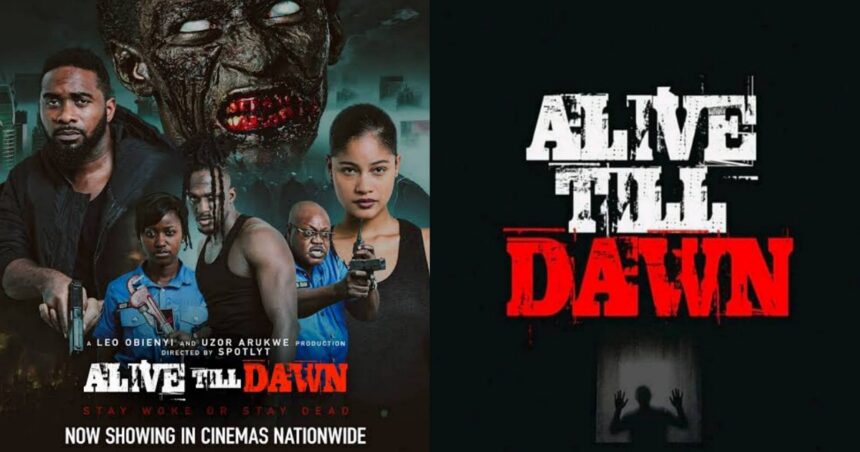
I caught Alive Till Dawn in a packed theater in Abuja immediately after its release on January 30, 2026. People were buzzing about it being Nigeria’s first major zombie thriller, and honestly, that hype pulled me in. Nollywood has dabbled in horror before, with ghost stories and spiritual thrillers that lean heavy on juju and village curses, but a full-blown viral outbreak flick? That’s new territory. The film, directed by up-and-coming filmmaker Kelechi Udo, stars a mix of familiar faces like Rita Dominic as a tough police chief and newer talents like Timini Egbuson playing a street-smart survivor. Set against the chaotic backdrop of Abuja during a mysterious virus that turns people into flesh-hungry monsters, it’s ambitious. But ambition doesn’t always equal execution. After sitting through its 105-minute runtime, I’d give it a solid 5 out of 10. It’s watchable, sure, and it has moments that get your heart racing, but it stumbles under the weight of its own aspirations, feeling more like a rough draft than a polished product. If this came from Hollywood or even South Korea, we’d probably dismiss it as forgettable mid-tier fare, not hail it as groundbreaking just because it’s a “first.”
Alive Till Dawn
Let’s start with the plot, keeping things spoiler-free since the movie’s still fresh. The story kicks off in the heart of Abuja, where a strange virus starts spreading like wildfire through the city. We follow a group of survivors who barricade themselves in a rundown police station, turning it into their last stronghold against the undead horde outside. There’s a mix of cops, civilians, and a few shady characters thrown in, all dealing with dwindling supplies, internal conflicts, and the constant threat of infection. The narrative draws clear inspiration from classics like George Romero’s Night of the Living Dead, with that siege mentality where the real danger often comes from the people inside rather than the zombies clawing at the doors. Udo keeps the action contained mostly to the station, which builds tension in the early acts, but as things progress, we get glimpses of the wider apocalypse ripping through familiar Nigerian landmarks like the National Mosque and Aso Rock. It’s a setup that promises high stakes and moral dilemmas, like who gets sacrificed when resources run low or how far someone will go to protect their family. Without giving away twists, the plot hinges on a few key revelations about the virus’s origins, tying into themes of government corruption and societal breakdown that feel very Nollywood at their core.

But here’s where the “spark” comes in: is Nollywood really ready for sci-fi horror like this? Comparing it to Train to Busan, that South Korean gem from 2016, Alive Till Dawn falls short in pacing and emotional depth. Train to Busan masterfully blends heart-pounding zombie chases with gut-wrenching family drama on a speeding train, making you care about every character before the bites start. Alive Till Dawn tries something similar with its ensemble trapped in one spot, but the emotional beats land with a thud more often than not. The zombies here aren’t the relentless, terrifying swarms you see in The Walking Dead, where the undead feel like an unstoppable force of nature. Instead, they come across as sluggish and almost comical at times, shambling around like folks who’ve just stumbled out of an all-night vigil at a white-garment church, complete with jerky movements that scream low-budget effects rather than genuine dread. Be brutally honest? The “Nigerian Zombie” doesn’t scare; it amuses. In one scene, a zombie lurches forward with what looks like smeared palm oil for blood, and I couldn’t help but chuckle, thinking it resembled a bad Nollywood makeup job from those old ritual films. Resident Evil this is not; it’s more like a viral skit gone long. Why does Nollywood keep chasing genres like this when our budgets hover around $500,000 to $1 million, per industry reports from the Nigerian Film Corporation? Hollywood throws $100 million at zombie flicks like World War Z, and it shows in the seamless CGI and practical effects. Here, the limitations scream from the screen, turning what could be a bold step into a reminder of our industry’s constraints.
Diving into the characters, the film assembles a diverse group that represents slices of Nigerian society, which is one of its smarter moves. Rita Dominic’s Inspector Aisha is the anchor, a no-nonsense police chief who’s seen too much corruption in her career and now faces the end of the world with grim determination. She’s the voice of reason, barking orders and making tough calls, but the script gives her a backstory involving a lost child that adds layers of vulnerability. Then there’s Timini Egbuson as Bode, a quick-witted mechanic from the streets who brings street smarts and comic relief, cracking jokes about jollof rice even as zombies bang on the doors. His arc involves learning to trust authority figures, which ties into broader themes of class divide in Nigeria. Supporting roles include Ini Edo as a pregnant journalist named Chioma, who’s resourceful but haunted by survivor’s guilt, and veteran actor Richard Mofe-Damijo as a shady politician who’s more interested in saving his own skin than the group. The ensemble dynamic works on paper, with tensions boiling over into arguments about rationing food or deciding whether to let in outsiders. However, the writing often reduces them to archetypes: the strong leader, the funny sidekick, the damsel in distress. Aisha’s decisions feel predictable, like when she has to choose between mercy and survival, echoing every zombie story ever. Bode’s humor lands half the time, but some lines feel forced, as if the script is trying too hard to inject levity. Chioma’s pregnancy subplot adds stakes, but it’s underdeveloped, serving more as a plot device than a deep exploration of motherhood in crisis. Overall, the characters are serviceable, but they lack the nuance that makes you root for them beyond basic sympathy. In The Walking Dead, characters like Rick Grimes evolve over seasons, showing moral gray areas; here, with just one film, everyone stays pretty static, which limits emotional investment.
On the acting front, the performances are a mixed bag, with some standouts elevating the material while others drag it down. Rita Dominic delivers a commanding turn as Inspector Aisha, channeling that quiet intensity she’s known for from films like 76. Her scenes where she confronts the group about their dwindling ammo are raw and believable, her voice cracking just enough to show the strain without overdoing it. She’s the film’s MVP, grounding the chaos with a performance that feels lived-in, drawing from real Nigerian women in power who’ve navigated male-dominated fields. Timini Egbuson brings charisma to Bode, his natural charm shining through in banter that lightens the mood, but he struggles in the more dramatic moments, like a confrontation where his past catches up. It’s not bad, just uneven, as if he’s more comfortable in rom-coms than horror. Ini Edo as Chioma is solid, her portrayal of quiet resilience hitting home, especially in a tense sequence where she hides from zombies while protecting her belly. Richard Mofe-Damijo chews scenery as the politician, his booming voice and sly grins making him a fun antagonist, though the role borders on caricature. Lesser-known actors in zombie roles don’t get much to do beyond groaning and lunging, but the makeup team at least makes their transformations look painful. Overall, the cast gives it their all, but the script’s limitations hold them back. If this were a Hollywood production with A-listers like those in Train to Busan, the acting might carry the film further; here, it’s competent but not transformative.
Technically, Alive Till Dawn shows promise but betrays its budget in key areas. Cinematography by veteran DP Yinka Edward captures Abuja’s urban sprawl effectively, using wide shots of empty streets littered with abandoned danfo buses to evoke isolation. The police station interiors are lit with harsh fluorescent lights that flicker during power outages, adding to the claustrophobia, reminiscent of 28 Days Later’s gritty realism. However, some night scenes are too dark, making action hard to follow, a common issue in low-budget films where lighting rigs are limited. Direction from Kelechi Udo is energetic, with quick cuts during zombie attacks that build suspense, but he overrelies on jump scares, like sudden bangs on windows that feel cheap after the third time. Editing paces the first half well, intercutting between the group’s debates and exterior zombie shots, but the second act drags with repetitive arguments. Sound design is a highlight, with eerie moans echoing through the station and a score by composer Segun Akinola that mixes traditional Nigerian percussion with synth-heavy tension builders. Gunshots crack realistically, and the virus’s gurgling effects are unsettling. But visual effects for the zombies are hit-or-miss; practical makeup works for close-ups, showing veiny skin and bloody bites, but CGI for larger crowds looks dated, like early 2000s video game renders. Compared to The Walking Dead’s seamless blend of practical and digital effects, this feels amateurish. Production values, per interviews with Udo in Vanguard newspaper, were stretched thin, leading to shortcuts that show on screen.
Strengths lie in its cultural specificity, which sets it apart from Western zombie fare. The film weaves in Nigerian elements like references to fuel scarcity affecting escape plans or zombies disrupting a bustling market, making the apocalypse feel local and relatable. Moments of humor rooted in pidgin English banter cut through the horror, providing relief without undermining tension. It’s bold for Nollywood to tackle this genre, potentially opening doors for more sci-fi, as seen in South Africa’s District 9, which blended local issues with aliens on a modest budget. Weaknesses, though, are glaring: the plot borrows too heavily from tropes without innovating, leading to predictability. Pacing sags in the middle, with too much talking and not enough action, and the ending rushes to a close that feels unearned. The “first mover” trap is real here; audiences are grading on a curve because it’s Nigeria’s debut big-screen zombie feature, per social media buzz on X where posts hail it as a milestone despite flaws. If this exact movie dropped from South Korea, like #Alive in 2020, we’d critique its shallow characters and spotty effects harshly, calling it mid at best. Hollywood versions like Army of the Dead get roasted for similar issues, yet here, existence alone earns praise. Are we lowering standards? Absolutely. Nollywood has strengths in drama and comedy, as evidenced by hits like The Wedding Party, which grossed over ₦450 million. Chasing high-concept genres without matching resources risks diluting quality. Data from Box Office Mojo shows zombie films thrive on spectacle; without it, Alive Till Dawn shambles rather than sprints.
Wrapping up, Alive Till Dawn is a valiant effort that highlights Nollywood’s growing ambition, but it doesn’t quite stick the landing. At 5/10, it’s worth a watch for fans curious about genre expansion, especially in theaters where group reactions amp up the fun. Yet, it begs the question: why obsess over zombies when our industry excels in stories grounded in everyday Nigerian life? Perhaps future attempts, with better funding from streaming giants like Netflix, which invested $23 million in African content in 2025 per their reports, could elevate this. For now, it’s a step forward, but one that trips over its own feet. If you’re in Port Harcourt like the user info suggests, catch it at a local cinema; just temper expectations. This isn’t the zombie revolution Nollywood needs, but it’s a spark that could ignite something bigger.