




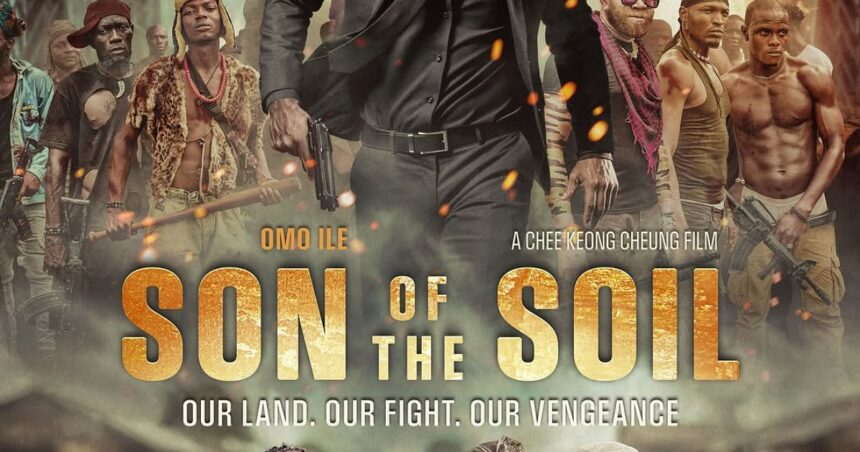
The action-thriller film Son of the Soil came out in 2025. It mixes elements from Nollywood and international action styles. Directed by Chee Keong Cheung, the movie stars Razaaq Adoti, who also wrote the script. The story centers on a former soldier who returns to Lagos for revenge. This UK-Nigeria co-production shows ambition in its scope. It aims to blend local Nigerian issues with global action tropes. The film released in Nigerian cinemas on November 21, 2025; Netflix added it on March 1, 2026; U.S. theaters got it on March 6, 2026.
Plot Summary
Son of the Soil follows Zion Ladejo, a former Nigerian special forces soldier living abroad. He comes back to Lagos after his sister Ronke dies under odd conditions. Her death links to a dangerous drug trade and corrupt figures in the city. Zion digs into the truth, facing off against a drug lord and his enforcers. The plot builds through chases, fights, and revelations about crime in Lagos. It avoids major twists early on to keep viewers hooked. The story draws from revenge classics like John Wick, but sets it in a Nigerian context with street-level grit. Zion’s journey involves old friends, family ties, and personal demons from his military past. The film keeps spoilers low by focusing on his step-by-step investigation. It shows Lagos as a vibrant yet harsh place, full of markets, traffic, and hidden dangers. The narrative moves at a steady pace, with action peaks that drive the story forward. Viewers get a sense of escalating tension as Zion gets closer to the people behind his sister’s death. The ending ties up loose ends in a direct way, without overcomplicating things. This setup makes the film accessible for action fans, while hinting at broader themes like corruption and loss.
Character Analysis
Zion Ladejo stands as the central figure in Son of the Soil. Played by Razaaq Adoti, Zion is a man shaped by his soldier background. He carries guilt from past missions and a strong sense of duty to his family. His return to Lagos forces him to confront how much he has changed since leaving Nigeria. Zion acts as a lone wolf type, common in revenge stories; he relies on his skills more than allies. This makes him relatable in moments of quiet reflection, but less so when the script pushes him into heroic cliches. His motivations stem from love for his sister and anger at the system that failed her. Yet, the film does not explore his inner world deeply enough. Viewers see flashes of his pain through flashbacks, but these feel brief. Zion’s arc involves rediscovering his roots, or “soil,” as the title suggests. He starts detached and ends more connected to his home. This theme could have added layers, but it stays surface-level.
Ronke, Zion’s sister, appears mostly in memories and early scenes. Sharon Rotimi portrays her as a vibrant young woman caught in bad circumstances. She represents innocence lost to urban crime. Her character serves the plot by motivating Zion, but lacks full development. The film shows her struggles with poverty and temptation, yet these elements come across as quick setups rather than detailed portraits. Ronke’s death drives the story, making her a key emotional anchor. However, she fits the trope of a female victim sparking male revenge; this limits her to a symbolic role.
The antagonist side includes the drug lord, played by Philip Asaya, and his henchman Shakabula, portrayed by Taye Arimoro. The drug lord embodies corruption at high levels. He operates with impunity, using wealth and connections to control parts of Lagos. His character draws from real-world issues like drug trafficking in Nigeria. Asaya’s role shows cunning and ruthlessness, but the script gives him few scenes to shine beyond threats. Shakabula acts as the muscle, a brutal enforcer who handles dirty work. Arimoro brings physical presence to the part, making him a credible threat in fights. Yet, both villains lack backstories that could make them more than obstacles for Zion. They represent systemic evil, but without nuance, they feel flat.
Supporting characters add some color. Patience Ozokwor plays a matriarchal figure, perhaps a family elder or community leader. Her role brings wisdom and emotional weight, grounding the story in Nigerian culture. Ireti Doyle appears as a sharp investigator or ally, providing info to Zion. She adds professionalism and contrast to the chaos. Sunshine Rosman and Damilola Ogunsi fill in smaller parts, like friends or informants. These roles help build the world of Lagos, showing everyday people affected by crime. Kehinde Hannah Alagbe and Ijelu Folojimi contribute to ensemble scenes, adding authenticity through local dialects and mannerisms. Overall, the characters serve the action plot well, but many could use more depth to elevate the film beyond genre basics. The focus on Zion leaves others in the background, which weakens the emotional stakes at times.
To expand on Zion’s complexity, consider how his military past influences his actions. He uses tactical skills in urban settings, adapting army training to street fights. This creates interesting contrasts; he is efficient but out of place in civilian life. The film hints at post-traumatic stress, with nightmares or hesitations in key moments. Yet, these are not pursued fully. Ronke’s character could have benefited from more screen time before her death. Showing her daily life would make her loss hit harder. For the villains, adding motives beyond greed could help. Perhaps the drug lord has a twisted sense of providing for the community, or Shakabula has a personal grudge. Such details would make conflicts more engaging. The supporting cast shines in group scenes, like family gatherings or market interactions. These moments capture Nigerian social dynamics, with banter and shared history. Ozokwor’s character, in particular, stands out for her authoritative presence; she commands respect without raising her voice. Doyle’s role adds intrigue, as she navigates bureaucracy to aid Zion. The film uses these characters to comment on societal issues, like police corruption or youth vulnerability. However, the script often prioritizes action over development, leading to missed opportunities. In a longer runtime, exploring side stories could enrich the narrative. As it stands, the characters function effectively for the thriller format, but leave room for improvement in depth and originality.
Acting Performances
Razaaq Adoti leads the cast as Zion. He brings physical intensity to the role, handling fight scenes with conviction. Adoti’s background in films like Black Hawk Down helps him portray a soldier convincingly. His delivery in quiet moments shows vulnerability, especially in grief scenes. However, some dialogue feels stiff; Adoti struggles with lines that sound expository. Overall, he carries the film well, making Zion a solid anchor. Taye Arimoro impresses as Shakabula. He conveys menace through body language and stares. Arimoro’s performance adds tension to confrontations, making him a memorable foe. His accent and mannerisms fit the Lagos setting, adding authenticity.
Sharon Rotimi plays Ronke with warmth. In limited scenes, she makes the character likable and real. Rotimi captures the energy of a young woman facing hardships. Her performance strengthens the emotional core, even if the role is small. Philip Asaya as the drug lord delivers a calculated villain. He uses subtle expressions to show control and anger. Asaya’s work elevates the part beyond stereotype, though the script limits him.
Patience Ozokwor stands out in her supporting role. Known for Nollywood work, she brings gravitas and humor. Ozokwor’s timing in dialogues adds levity amid tension. Her presence feels natural, enhancing family scenes. Ireti Doyle excels as the ally figure. She portrays competence and wit, making her interactions with Zion engaging. Doyle’s delivery is sharp, fitting a professional in a corrupt system.
Sunshine Rosman and Damilola Ogunsi handle smaller roles capably. They add to the ensemble without overshadowing leads. Kehinde Hannah Alagbe and Ijelu Folojimi contribute solid performances in bit parts, helping build the world. The cast overall shows commitment; many actors draw from personal experiences to make scenes feel lived-in. Adoti’s dual role as writer and star adds passion, visible in his dedication. Arimoro’s physicality pairs well with Adoti’s, creating believable fights. Rotimi’s brief but impactful work sets up the revenge motive effectively. Asaya avoids overacting, keeping the villain grounded. Ozokwor’s experience shines, providing emotional depth. Doyle brings polish, contrasting the gritty tone.
Some performances suffer from script issues. Clunky lines challenge actors to make them natural. In action-heavy scenes, focus shifts to stunts, reducing acting opportunities. Yet, the cast rises above this in key moments. For example, Adoti’s silent stares convey more than words. Arimoro’s snarls add intimidation. The group chemistry in ensemble scenes feels real, reflecting Nigerian social bonds. This authenticity helps the film stand out from pure Hollywood imitations. The performances blend Nollywood expressiveness with thriller restraint, creating a unique flavor. While not all actors get equal spotlight, the leads and key supports deliver what the story needs.
To delve deeper, Adoti’s portrayal includes subtle nods to his Nigerian heritage. He uses Pidgin English in spots, adding realism. His body language shifts from rigid soldier to adaptive street fighter. Arimoro matches this with raw energy; his fights feel improvised yet choreographed. Rotimi’s scenes, though few, show range from joy to fear. Asaya’s calm demeanor builds suspense, making his outbursts effective. Ozokwor infuses her role with cultural wisdom, using proverbs naturally. Doyle’s performance hints at hidden motives, adding layers. The ensemble work in crowd scenes captures Lagos chaos, with actors reacting organically. Directorial choices help; close-ups capture emotions well. Fight training shows in physical scenes, with actors committing to contact. Vocal work varies accents, reflecting diverse backgrounds. Overall, the acting holds the film together, compensating for script flaws in places.
Technical Aspects
Direction by Chee Keong Cheung mixes styles effectively. He draws from his action background, like in Redcon-1, to stage dynamic sequences. Cheung uses Lagos locations to full effect, turning streets into battlegrounds. His pacing keeps the film moving, with builds to climaxes. However, some scenes feel rushed; transitions could be smoother. The direction highlights cultural elements, like market vibes, without exoticizing them.
Cinematography captures Lagos grit. Handheld cameras add urgency to chases. Dutch angles appear often, emphasizing chaos. Zooms in fights heighten intensity. Lighting uses natural sources, like street lamps, for moody effects. Colors reflect the setting: vibrant markets contrast dark alleys. Yet, some shots feel overdone; excessive angles can distract. The visual style borrows from 80s action, with bloody close-ups.
Editing maintains rhythm. Quick cuts in action work well, showing impacts clearly. Slower edits in dramatic scenes allow breathing room. Flashbacks integrate smoothly, avoiding confusion. Pacing issues arise in mid-film; some subplots drag. Sound design enhances immersion. Gunshots and punches have weight. Ambient Lagos noise, like horns and chatter, builds atmosphere. Music mixes Afrobeat with tense scores. Tracks underscore emotions without overpowering. Dialogue mixes clear, though accents may challenge non-Nigerian viewers; subtitles help.
Production design recreates Lagos authenticity. Sets include crowded homes and sleek offices. Props like local foods add detail. Costumes fit characters: Zion’s tactical gear versus villains’ flashy suits. Special effects handle violence practically; CGI is minimal and effective when used. Makeup for injuries looks realistic, adding to brutality.
Cheung’s direction unifies these elements. He balances action with story beats. Cinematography by the team captures energy. Editing from post-production keeps flow. Sound by specialists adds layers. The technical side shows low-budget ingenuity; practical locations save costs while adding realness. Weak spots include inconsistent lighting in nights. Some edits jump abruptly. Music occasionally feels generic. Yet, the aspects support the thriller tone well.
Expanding on cinematography, the use of wide shots shows Lagos scale, making Zion seem small in the city. Close-ups on faces reveal tensions. Color grading gives a desaturated look for grit. Dutch angles, while frequent, suit disorientation themes. In one chase, camera follows Zion fluidly, building speed. Editing uses match cuts to link scenes thematically. For example, a punch cuts to a door slam. Sound design layers effects: echoes in warehouses amplify fights. Dialogue recording captures natural overlaps. Score by composers blends traditional instruments with synths. Production values shine in vehicle stunts; crashes look impactful. Wardrobe details like worn boots show character history. The technical execution makes the film punch above its weight, despite flaws.
Verdict: 7/10