







The ‘Colours of Fire’ Afrofusion Label; Marketing Gimmick or New Genre?
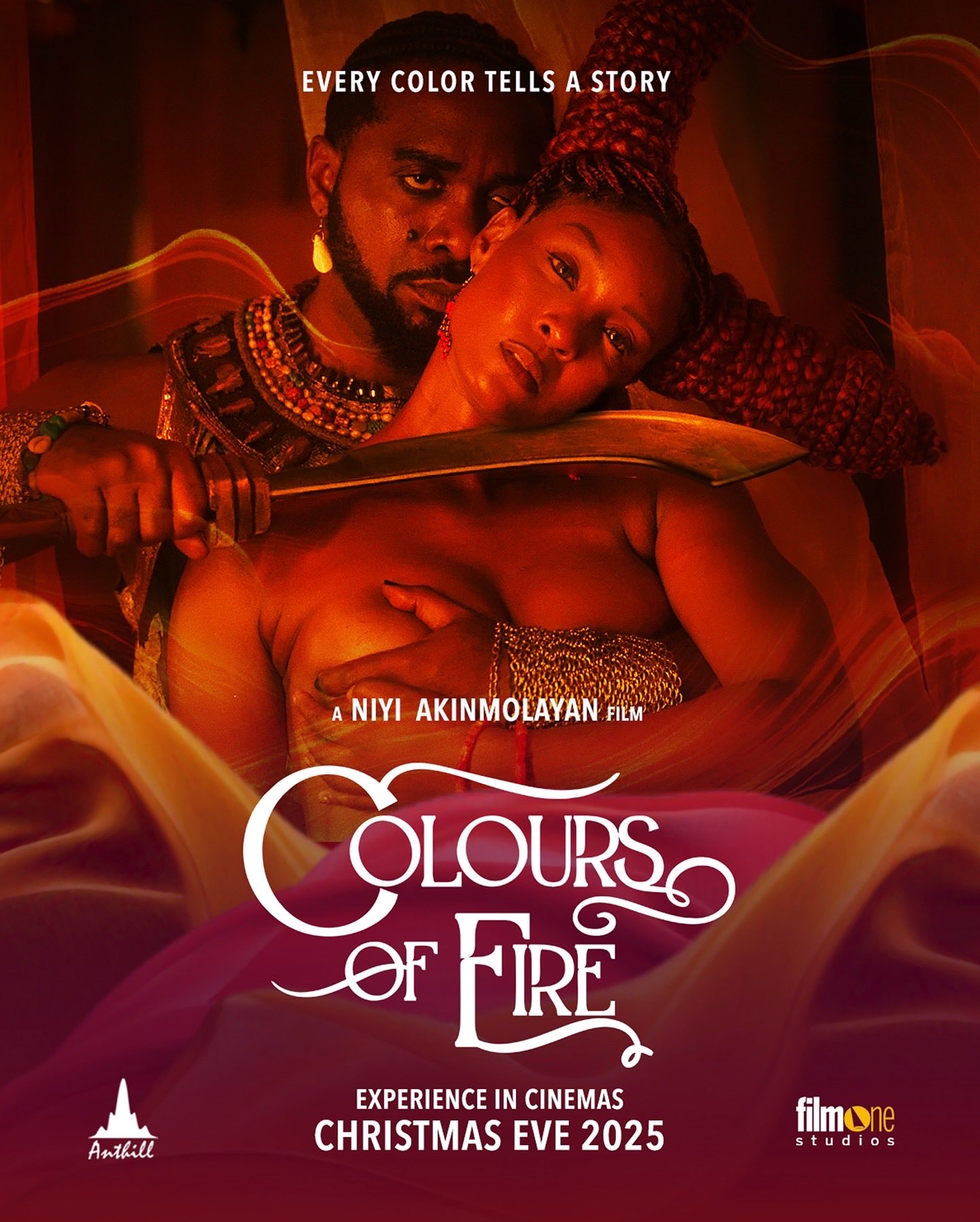 When Colours of Fire hit Nigerian cinemas on December 24, 2025, it did not just arrive as another holiday blockbuster. Director Niyi Akinmolayan positioned it as something bigger, the dawn of a fresh category in African cinema that he dubbed Afrofusion. He described this as a mix of traditional mythology from across the continent, cutting-edge visual effects, and a showcase of pan-African fashion that pulls from various cultures into one cohesive story. In interviews leading up to the release, Akinmolayan explained that Afrofusion is like a salad of African elements, where languages, customs, and artistic styles from different regions blend without losing their individual flavors. He went so far as to call Colours of Fire the first film in this genre, a bold statement that sparked immediate chatter among moviegoers and critics alike.
But let’s pause here and ask the obvious question; is this really a groundbreaking new genre, or is it simply a clever way to hype up a high-budget fantasy flick with impressive costumes and effects? As someone who has followed Nollywood’s evolution for years, I have seen plenty of films that weave ancient myths with modern production tricks. Colours of Fire, for all its visual flair, feels more like the latest entry in a long line of epic tales rather than the start of something entirely original. To unpack this, we need to look at what the movie brings to the table, how it stacks up against predecessors like Jagun Jagun and Lisabi, and whether the Afrofusion tag holds up under scrutiny.
First, a bit about the film itself. Colours of Fire tells the story of two rivals whose love affair ignites chaos in an empire, drawing on themes of romance, betrayal, and power struggles rooted in African lore. The plot centers on a warrior, played by Uzor Arukwe, who falls for a character portrayed by Osas Ighodaro, leading to events that threaten the stability of their world. Supporting roles from actors like Mercy Aigbe, Femi Branch, Gabriel Afolayan, and Ibrahim Chatta add layers of intrigue and conflict. Produced by Anthill Studios in partnership with FilmOne Studios and Imuetinyan Productions, the movie emphasizes vibrant color palettes, elaborate sets, and a narrative that hops between mythical realms and emotional drama.
What stands out most in the early buzz is the technical side. The VFX supervisor, Claudia Nwoga, got a lot of attention for her breakdowns of the film’s digital wizardry. In one YouTube session on Nollywire’s channel, she detailed the painstaking process of building the visual world, from fiery explosions to ethereal landscapes that blend real locations with computer-generated magic. Director Akinmolayan, along with cinematographer Barnabas Emordi and editor Dolapo Adigun, shared insights in pre-release content about the opening scene alone; they covered everything from lighting choices to color grading that evokes the heat of African suns and the mystery of ancient spirits. These behind-the-scenes glimpses show a team committed to pushing Nollywood’s boundaries, aiming for a cinematic experience that rivals international fantasies.
Audience reactions have been glowing so far. Just days after the premiere, social media lit up with praise for the stunning visuals and the way the film immerses viewers in its world. One viewer on Facebook called it pure fire, noting that it offers something unlike anything seen before in local cinemas. Reviews highlight the emotional depth alongside the spectacle, with the story’s layers of love and rivalry resonating strongly. On platforms like Instagram, posts rave about the chemistry between Arukwe and Ighodaro, describing their scenes as fiery and captivating. Even the soundtrack and fashion elements, drawing from various African traditions, get nods for adding authenticity and flair.
Yet, this is where the Afrofusion claim starts to feel shaky. Akinmolayan insists that his film pioneers this blend, mixing languages and cultures from across Africa to reflect what being African means to him. He has said in discussions that Afrofusion is not limited to movies; it could apply to art, food, or music, as long as it fuses diverse elements into a unified whole. In Colours of Fire, this shows up in costumes that pull from West African textiles, dialogue that slips between languages, and myths that echo stories from multiple ethnic groups. It sounds innovative on paper, but dig a little deeper into Nollywood’s history, and you find films doing similar things long before this one.

Take Jagun Jagun, released in 2023. Directed by Tope Adebayo and Adebayo Tijani, with Femi Adebayo in the lead, this Yoruba epic dives into themes of warfare, loyalty, and supernatural elements drawn from traditional folklore. The story follows a young warrior navigating power struggles in a kingdom plagued by tyranny, complete with battle scenes enhanced by modern VFX. Critics at the time called it a masterclass in Nollywood’s growth, praising how it combined gritty realism with mythical undertones. The film uses costumes rooted in Yoruba culture, but it also incorporates broader African motifs in its weaponry and rituals. Sound familiar? Jagun Jagun’s production values, including its effects for intense fight sequences, set a high bar for epics, and it even won recognition at awards like the 2024 Africa Movie Academy Awards.
Now, compare that to Colours of Fire. Both films rely on VFX to bring mythical battles to life; Jagun Jagun has scenes of warriors clashing with almost supernatural force, while Colours of Fire amps up the fantasy with fire motifs and enchanted environments. But where Jagun Jagun sticks closer to Yoruba-specific legends, Colours of Fire claims to broaden the scope by infusing pan-African elements. Is that enough to call it a new genre? Not really; it seems more like an extension of what Jagun Jagun already achieved, perhaps with a bigger budget and more polished effects. Some online discussions even link the two, noting how Anthill Studios’ involvement in later projects builds on the momentum from Jagun Jagun’s success.
Then there is Lisabi: The Uprising, another 2024 release directed by none other than Niyi Akinmolayan himself. This one tells the tale of Lisabi, an 18th-century Egba farmer who sparks a rebellion against the Oyo Empire. It is packed with historical drama, themes of freedom and resistance, and yes, impressive VFX for its action sequences. Reviews have hailed it as Nollywood’s best epic yet, with strong performances and a narrative that celebrates Yoruba heritage. The film blends real historical events with mythical flair, using modern cinematography to make ancient battles feel immediate and visceral. Anthill Studios produced this too, continuing their push for high-production-value stories rooted in African history.
So, if Lisabi already mixes mythology, cultural pride, and top-tier effects under Akinmolayan’s direction, why does Colours of Fire get the Afrofusion crown? The differences seem minor; Lisabi focuses on Yoruba specifics, while Colours of Fire pulls in broader African influences. But even Lisabi incorporates elements like traditional attire and rituals that echo wider West African traditions. Critics have pointed out that Lisabi feels like a refined version of earlier epics, with better pacing and visuals. If anything, Colours of Fire builds directly on Lisabi’s foundation, adding more fantasy layers but not reinventing the wheel.
This pattern is not unique to these films. Nollywood has a rich tradition of blending African mythology with contemporary filmmaking. Look at King of Thieves from 2022, which fuses Yoruba theatre traditions with dynamic cinema, telling a story of bandits and spirits in a mythical kingdom. It uses VFX for magical elements, much like Colours of Fire does for its fire-themed spectacles. Or consider Osamede, a 2025 release that brings Benin mythology to the screen, shifting focus from Yoruba dominance to other Nigerian cultures. This film explores ancient lore with modern effects, creating a visual feast that highlights Edo heritage.
Even further back, movies like The Artifacts: Stone of Fatima in 2025 delve into fantasy rooted in African myths, dealing with power, betrayal, and ancient artifacts. It merges traditional storytelling with high-tech visuals, much like what Afrofusion promises. And do not forget older entries; films from the early 2010s experimented with horror and fantasy using basic effects, evolving into today’s polished epics. A list of 30 Nollywood films exploring spirituality and tradition includes many that weave myths into modern narratives.
What this shows is that Nollywood has been fusing cultural elements with technology for years. The industry grew from low-budget videos to global streamers like Netflix, where epics like Jagun Jagun and Lisabi thrive. Directors like Akinmolayan have been at the forefront, experimenting during tough times like the COVID-19 era to refine their craft. Colours of Fire’s VFX team, led by Nwoga, deserves credit for the detail; her interviews reveal hours spent on textures and lighting to make myths feel alive. But calling it the first Afrofusion film ignores these predecessors.
Perhaps the label is more about marketing. In a crowded market, standing out matters. By coining Afrofusion, Akinmolayan creates buzz, positioning his film as a pioneer. Social media posts from Nollywire hype it as a game-changer, with clips showing intense scenes that draw viewers in. Yet, some industry voices question this; one review notes that while unique, it echoes earlier works. Cinemas have even faced accusations of bias in screening, with Akinmolayan calling out frustrations over limited showtimes.

In the end, Colours of Fire succeeds as a visually striking epic that advances Nollywood’s technical game. The deliberate choices in cinematography, like Emordi’s use of color to convey emotion, and Adigun’s editing for seamless pacing, make it worth watching. But as a new genre? It feels overstated. Compared to Jagun Jagun’s raw intensity or Lisabi’s historical depth, this is evolution, not revolution. Afrofusion might catch on as a term for pan-African blends, but claiming it starts here overlooks the groundwork laid by countless filmmakers.
If you are in Nigeria, catch it in theaters; the big screen does justice to its spectacle. For the rest of us, it prompts reflection on how labels shape perceptions in cinema. Nollywood keeps growing, and films like this push it forward, gimmick or not.